Lab Highlights from ASCB 2025 in Philadelphia

by Heidi Hehnly in , ,


This December, members of the Hehnly Lab traveled to Philadelphia to present their work at the 2025 American Society for Cell Biology (ASCB) Annual Meeting.

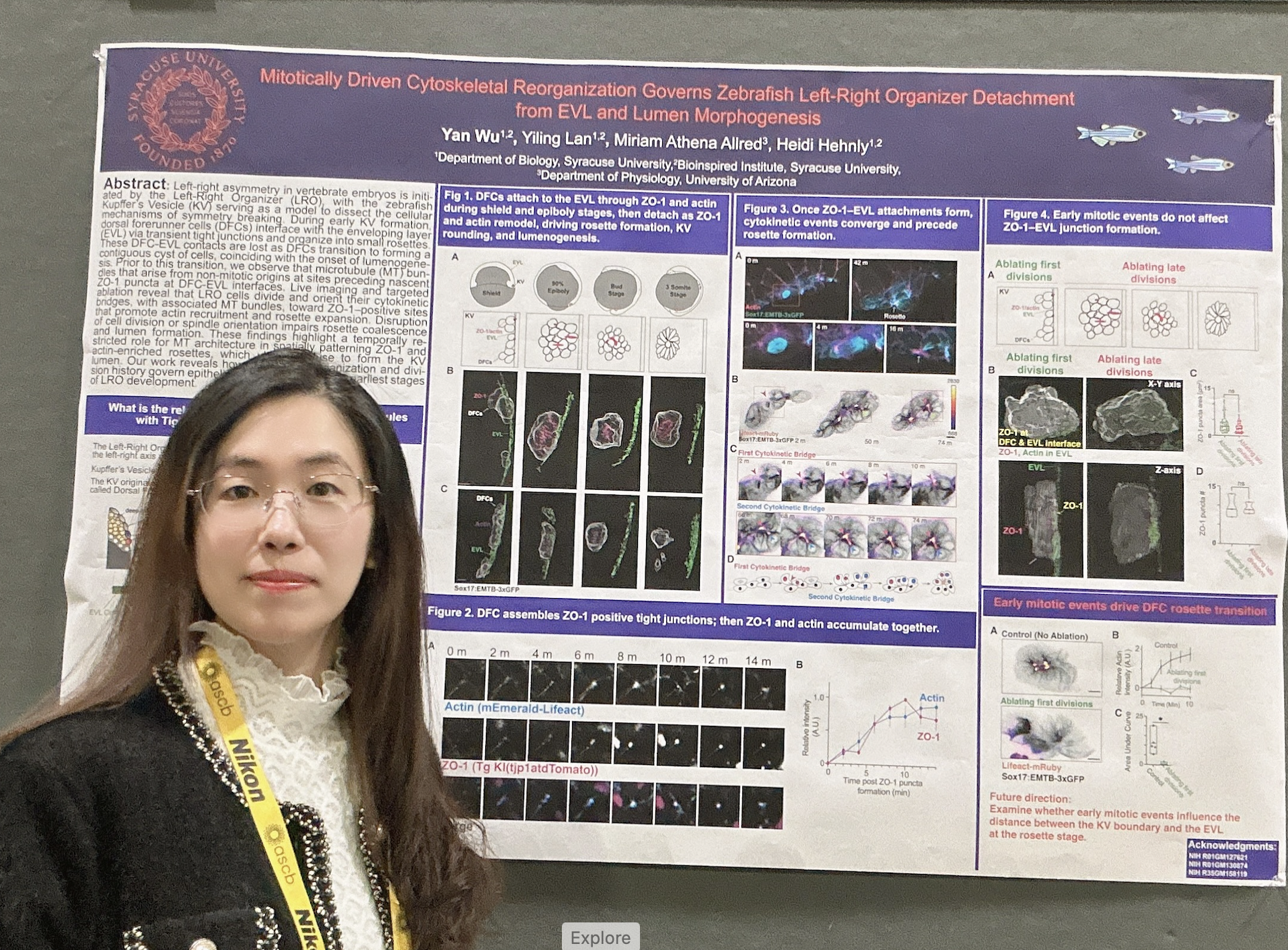
Yan Wu presented her poster, “Mitotically driven cytoskeletal reorganization governs zebrafish left–right organizer detachment from the EVL and lumen morphogenesis.” This work highlights how dynamic mitotic events shape tissue architecture during early embryogenesis and reflects a major collaborative effort within the lab. In addition to Yan’s leadership on the project, Yiling Lan and summer undergraduate Miriam Athena Allred made substantial experimental and conceptual contributions, with additional contributions from Carys Timpson during her summer research period.

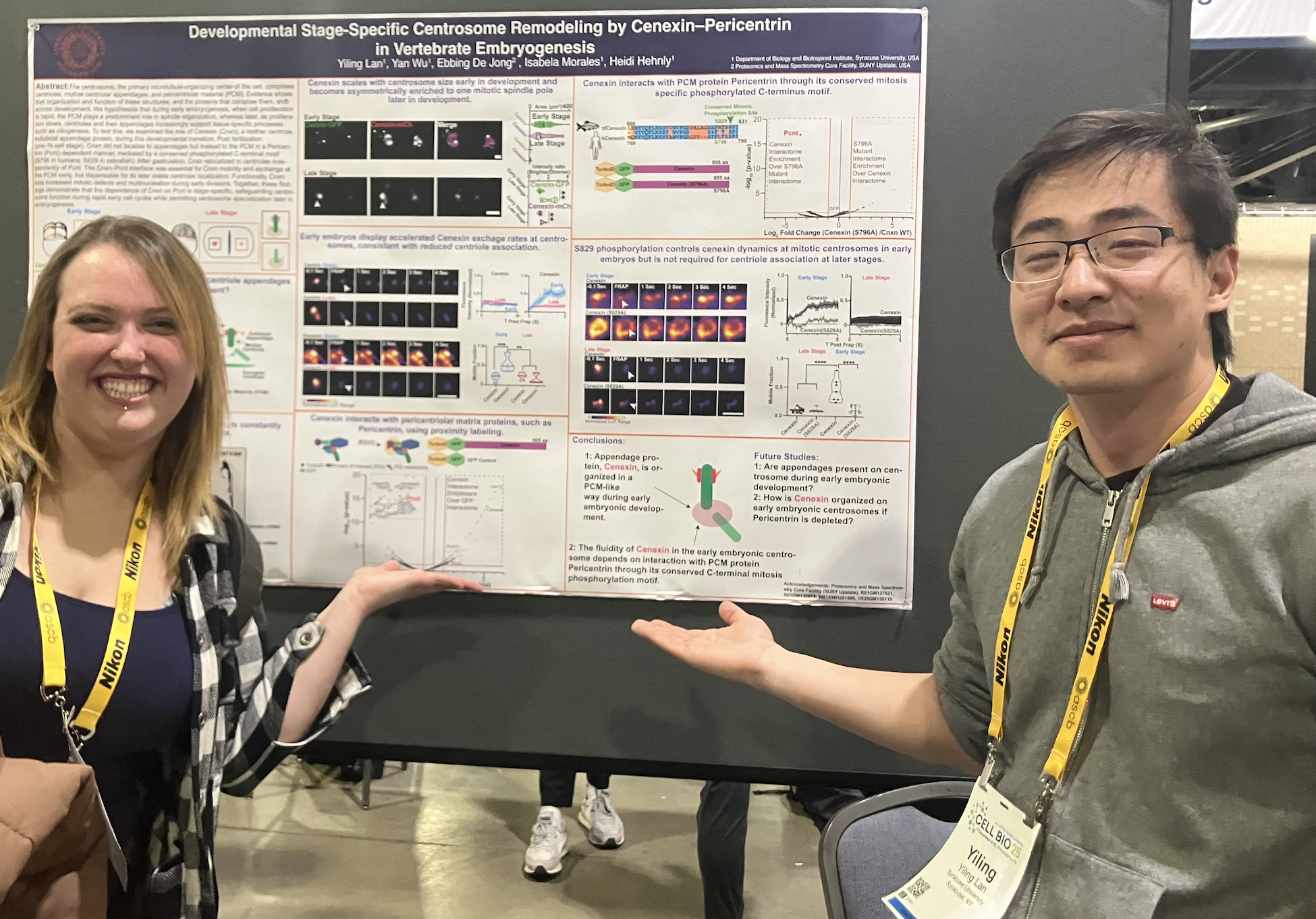
Yiling Lan also presented his work, “Developmental stage–specific centrosome remodeling by cenexin–pericentrin in vertebrate embryogenesis,” which explores how centrosome composition and organization are developmentally regulated to support morphogenesis. While at ASCB, Yiling had the opportunity to reconnect with former lab member Erin Curtis, now completing her PhD jointly at MIT and Duke— a reminder of the extended scientific community that grows from shared training experiences.

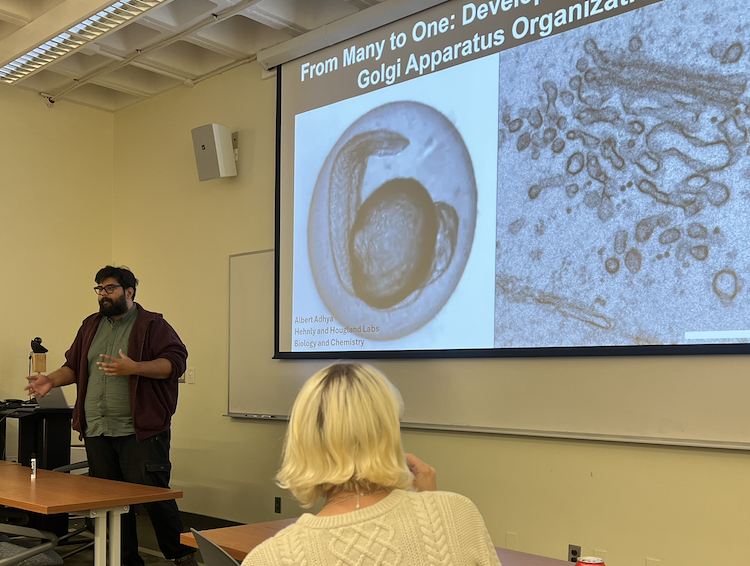
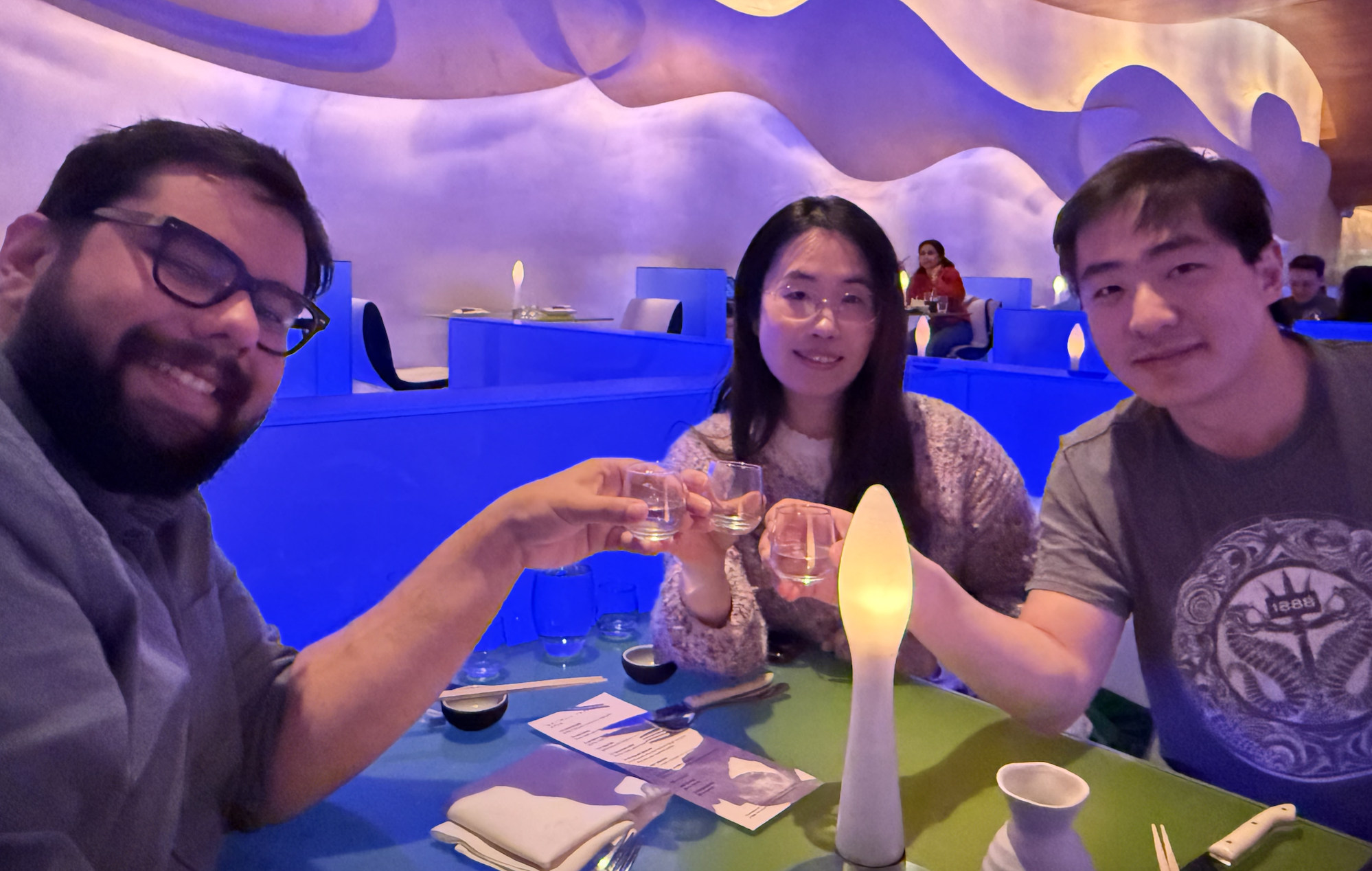
We were also excited to have Albert Adhya attend ASCB as he begins his journey in the lab. For Albert, the meeting served as an immersive introduction to the broader cell biology community and an opportunity to see firsthand how scientific ideas are communicated and refined. The group capped off the meeting with a celebratory dinner at Morimoto—an excellent way to mark a successful and energizing conference.


Welcome to the Lab, Albert Adhya

by Heidi Hehnly in ,


We are delighted to welcome Albert Adhya, a Chemistry Ph.D. candidate jointly mentored in my group and Jimmy Hougland’s lab, to our research team. Albert is bringing a unique interdisciplinary perspective at the interface of chemical biology and developmental cell biology.

His work in the lab will focus on two complementary projects:

  • Defining the role of the Golgi apparatus during Kupffer’s Vesicle (KV) morphogenesis, with an emphasis on how secretory trafficking contributes to early lumen formation and epithelial remodeling.

  • Investigating Ghrelin and the acylation enzyme GOAT in early vertebrate development, an emerging axis with intriguing implications for metabolic signaling during embryogenesis.

We’re excited to have him on board and look forward to the insights his interdisciplinary approach will bring to these questions.

Welcome, Albert!


New Preprint: Structural Diversity and Essential Functions of Zebrafish Left-Right Organizer Cilia

by Heidi Hehnly in ,


We are excited to share our new preprint on bioRxiv, Functionally Essential and Structurally Diverse: Insights into the Zebrafish Left-Right Organizer’s Cilia via Optogenetic IFT88 Perturbation and Volume Electron Microscopy . This work was led by Favour Ononiwu (Hehnly lab Graduate student) with contributions from Melissa Mikolaj (NCI- Narayan Lab), Christopher Dell (NCI-Narayan Lab), Abdalla Wael Shamil (Hehnly lab undergraduate), Kedar Narayan (NCI), and Heidi Hehnly.

Why this study matters

During vertebrate embryogenesis, the left-right organizer (LRO) generates asymmetric fluid flow that initiates left-right body patterning. In zebrafish, this role is carried out by a transient epithelial organ known as Kupffer’s Vesicle (KV). The cilia within KV have long been known to generate flow, but their structural heterogeneity and contribution to KV morphogenesis have remained unclear.

Our approach

We combined two powerful tools:

  • Optogenetics: Using a newly engineered sox17:Cry2-GFP zebrafish line, we clustered the intraflagellar transport protein IFT88 in KV progenitors via blue-light activation. This perturbation impaired ciliogenesis and disrupted lumen formation, establishing a direct role for cilia in KV morphogenesis.

  • Volume electron microscopy (vEM): We generated the first high-resolution 3D ultrastructural map of a mature KV, enabling unprecedented analysis of ciliary architecture across the tissue.

Key findings

  • Only ~70% of cilia retained both mother and daughter centrioles, suggesting that centriole elimination may occur during KV development.

  • Among centrioles, distal appendages (34%), subdistal appendages (92%), and rootlet fibers (5%) were present in highly variable patterns, revealing remarkable structural diversity.

  • Cilia were frequently associated with membrane-bound vesicles, including ciliary-associated vesicles (CaVs) and dense vesicles (CaDVs), with distinct spatial distributions across the KV.

Broader implications

Our findings uncover previously unrecognized complexity in LRO organization. The structural specialization of KV cilia suggests that they may contribute not only to generating flow but also to organizing the architecture of the organ itself. This work adds to a growing appreciation that cilia are not uniform organelles, but instead exhibit context-specific diversity that underpins their function.

Next steps

We anticipate that these insights will inform broader studies of ciliary specialization across tissues and their role in developmental disorders linked to left-right asymmetry.

👉 Read the full preprint here.


New Publication: Dynamic Forces Sculpt Organ Shape in Zebrafish Development

by Heidi Hehnly in ,


We are excited to share our new collaborative paper with the Manning and Amack labs, published in PNAS. This work addresses a fundamental question in developmental biology: how do cells and tissues achieve the precise shapes required for organ function?

Why this matters

Many studies have focused on how cell-intrinsic properties—like signaling pathways or cytoskeletal dynamics—contribute to tissue shape. But development is more than just cells behaving individually; it is also about how tissues as a whole generate and respond to forces. Recent theoretical work suggests that embryonic tissues exist near a “jamming” transition, meaning they can flow very slowly but still transmit large forces over long timescales. These dynamic forces, though often overlooked, have been hypothesized by Manning and Amack groups to play a powerful role in shaping organs.

Our focus: Kupffer’s vesicle

To test this idea, Amack and Manning labs turned to Kupffer’s vesicle (KV), a transient, ciliated organ in zebrafish embryos that our lab also loves to examine. KV plays a crucial role in establishing left-right asymmetry during development, making it an ideal model to study how tissues generate and respond to mechanical forces.

What we did

This project combined mathematical modeling, live imaging, and in vivo perturbations to test whether dynamic forces generated by tissue movements sculpt KV shape. The last part with in vivo perturbations, is where our group played an important role first with Mike Bates (a postbac in our lab and then Manager of the Blatt Imaging Center) and then with Yiling Lan (a graduate student in the lab).

  • Modeling predicted that slow tissue flows during embryogenesis could apply significant stresses to KV, driving its morphological changes.

  • Laser ablation experiments, performed in our lab (by Mike and Lan), were critical to test these predictions. By precisely severing tissue connections in the embryo, we altered force transmission and directly observed the resulting effects on KV shape. The outcomes matched the model predictions, providing strong evidence that dynamic forces are a key driver of organ morphology.

The bigger picture

The collaborative findings show that self-generated dynamic forces sculpt organ shape during development. Because many developmental processes occur on slow timescales, this principle likely applies broadly beyond zebrafish KV. This work opens the door to exploring how tissues harness dynamic mechanical forces across diverse developmental contexts.

We are thrilled to have contributed to this collaborative effort—particularly by performing the ablation experiments—and to see how interdisciplinary approaches combining modeling, physics, and cell biology can shed new light on fundamental developmental mechanisms.

📄 Read the full paper here